If you are planning a glamping resort, one of the first questions is simple:
How much does it cost to start a glamping business?
The answer depends on your location, number of units, accommodation type, infrastructure and the level of guest experience you want to create.
A small glamping business may start with a few units, while a larger luxury glamping resort can require a much higher investment.
Instead of looking only at the price of a tent or cabin, investors should calculate the total cost of getting each unit ready for guests.
The total cost of starting a glamping business usually includes several major categories:
The exact cost can vary significantly from one project to another.
For this reason, the price of the accommodation itself should never be treated as the total project budget.
If you already own suitable land, your initial investment may be significantly lower.
If not, land purchase or long-term leasing can become one of the largest expenses.
Before buying land for a glamping business, check:
A beautiful piece of land is not automatically a good glamping investment.
The site must also be practical to develop and operate.
Your accommodation type has a major impact on your glamping business cost.
Tents can provide a relatively low-cost way to enter the market.
They may work well for seasonal destinations and operators who want to test demand with a smaller initial investment.
However, climate, maintenance, insulation and seasonality should be considered.
Modular cabins normally require a higher initial investment but can offer better insulation, privacy, durability and year-round operation.
They can also support:
For higher-end glamping resorts, the accommodation itself can become part of the attraction.
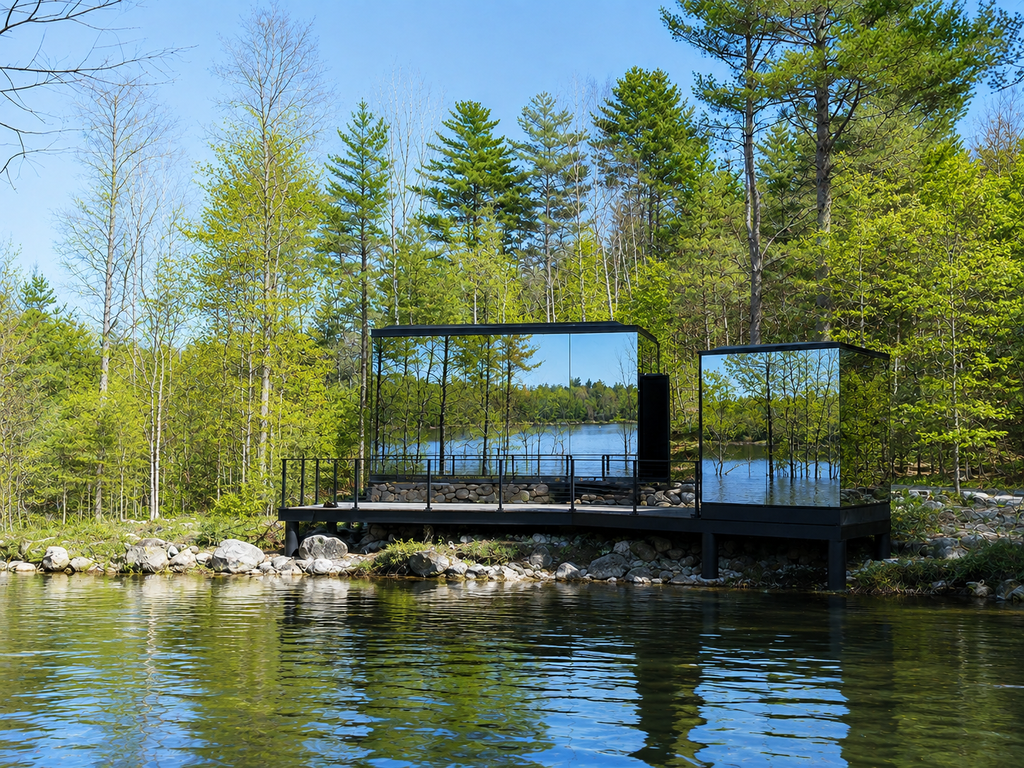
A distinctive mirror cabin or panoramic modular cabin, for example, can help a property create a premium visual identity and potentially support a higher nightly rate.
This is one of the areas first-time glamping investors often underestimate.
Even if your cabins arrive largely completed, the site may still require:
Infrastructure costs depend heavily on the condition and location of the land.
A remote site with no utilities can cost considerably more to develop than land with existing infrastructure.
If your glamping cabins are manufactured off-site, transportation should be included in the project budget from the beginning.
Shipping costs depend on:
This is especially important for international projects.
A cabin with a low factory price may not always provide the lowest total installed cost if transportation is inefficient.
For modular projects, transportation strategy should therefore be considered during the design stage.
Guests are paying for an experience, not just a structure.
Your budget may also need to include:
Luxury features increase the initial investment, but they may also help create a more distinctive property and support higher room rates.
The key question is whether the additional investment creates enough value for your target guest.
Requirements vary by country and region.
Depending on your location, you may need planning approval, building permits, engineering documentation, environmental assessments or hospitality-related licenses.
These costs should be researched locally before ordering accommodation units.
For international projects, cabin specifications may also need to be adapted to local electrical, plumbing, insulation or structural requirements.
Instead of asking only:
“How much does one glamping cabin cost?”
Ask:
“How much will one completed, operational guest unit cost?”
A simple project calculation can look like this:
Cabin + Shipping + Site Work + Utilities + Installation + Furniture + Permits = Total Cost Per Operational Unit
Then compare that figure with your expected revenue.
For example:
Nightly Rate × Occupancy × 365 Days = Potential Annual Room Revenue
This does not represent profit, because operating expenses still need to be deducted.
However, it gives investors a much better starting point for evaluating a glamping project.
First-time operators do not necessarily need to build the entire resort at once.
Starting with a smaller number of units can allow you to test:
If the first phase performs well, additional modular cabins can be added later.
This is one reason modular accommodation can be attractive for new glamping developments.
At PD Modular, we manufacture modular accommodation for glamping resorts, campgrounds and hospitality projects.
Rather than looking at the cabin alone, we can discuss the project based on:
This helps developers understand the accommodation and delivery side of the investment before moving forward.
So, how much does it cost to start a glamping business?
There is no single number that applies to every project.
A better approach is to calculate the total cost of turning your land and accommodation into an operational hospitality business.
Start with:
Land → Accommodation → Infrastructure → Shipping → Installation → Operations
Then compare your total investment with realistic nightly rates and occupancy in your market.
For first-time developers, starting with a smaller number of units and expanding based on actual demand can be a practical way to control investment risk.
If you are planning a new glamping resort or campground expansion, PD Modular can help you evaluate modular cabin options, customization and transportation based on your project requirements.
Yes. You can start a glamping business without previous hotel or hospitality experience.
In fact, many new glamping projects are started by landowners, property investors, campground operators, and entrepreneurs rather than experienced hotel operators.
However, having no hospitality experience means one thing: your first project should be simple to build, simple to operate, and easy to scale.
Here is what you should know before starting.
Not necessarily.
A small glamping property is very different from operating a traditional hotel. You may begin with only a few accommodation units and expand after testing demand.
The skills you need can also come from different partners.
For example, you can work with:
Your role as the owner is primarily to make the right investment decisions and build a guest experience people are willing to pay for.
If this is your first glamping project, avoid making the development unnecessarily complicated.
Start with five questions:
Think about your target guests before choosing the cabin.
Are you targeting couples, families, weekend travelers, nature tourists, or luxury travelers?
The answer affects the size, interior layout, amenities, privacy and price of your accommodation.
Research hotels, cabins, vacation rentals and glamping properties within your target area.
If comparable properties charge $150–$300 per night, you can begin estimating whether the project makes financial sense.
For example:
Average Daily Rate × Occupancy × Number of Units = Potential Accommodation Revenue
You do not need a perfect financial model at the beginning. You need enough information to decide whether the concept deserves further investigation.
Your accommodation units are only part of the investment.
A realistic glamping budget may include:
This is why beginners should calculate the total installed cost, rather than comparing cabin prices alone.
A cheaper cabin can become expensive if it requires significant on-site construction.
Both models can work.
Glamping tents usually have a lower initial investment and can be suitable for seasonal destinations.
Modular cabins generally require a higher initial investment but can provide better insulation, privacy, weather resistance and year-round operation.
They can also create a more premium guest experience.
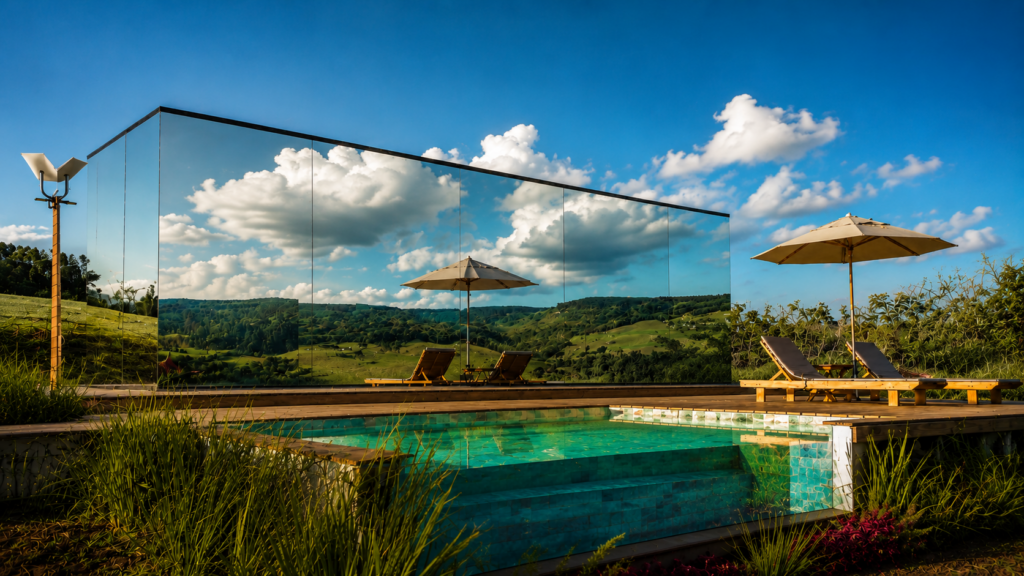
For projects targeting higher nightly rates, designs such as mirror cabins, panoramic cabins and modern modular cabins can become part of the destination itself.
Guests are not only paying for somewhere to sleep.
They are paying for the experience.
One of the biggest advantages of a modular glamping project is scalability.
Instead of immediately building 20 or 30 units, a new operator may begin with a smaller number of cabins.
Track:
Once the first units perform well, additional cabins can be added gradually.
This can reduce the risk of entering the hospitality industry for the first time.
A common mistake is choosing the accommodation first and studying the business model later.
A beautiful cabin does not automatically create a profitable glamping business.
Before ordering units, understand:
Location → Target Guest → Nightly Rate → Occupancy → Total Investment → Operating Cost → Potential Return
The cabin should support the business model, not define it.
For first-time developers, working directly with an experienced modular accommodation manufacturer can simplify part of the development process.
At PD Modular, we manufacture modular cabins and customized accommodation units for hospitality and tourism projects.
Depending on the project, we can support clients with:
For new glamping developers, the goal is not simply to buy a cabin.
It is to choose a product that fits the site, target nightly rate, guest experience and future expansion plan.
So, can you start a glamping business with no hospitality experience?
Yes — but start with the numbers, not the cabin.
Understand your target market, estimate the nightly rate and occupancy, calculate the total project cost, and then select accommodation that fits the business model.
Starting with a small number of units can also allow you to test demand before making a larger investment.
If you are planning a new glamping resort, campground expansion or modular cabin project, PD Modular can help evaluate suitable cabin configurations based on your site, target guests and project scale.
A great glamping cabin should offer more than accommodation. It should become part of the destination itself.
The Mirror Cabin is designed to blend into natural surroundings through its reflective exterior. As the landscape changes throughout the year, the appearance of the cabin changes with it.
From green forests and lakeside views to autumn colors and winter snow, one cabin can create completely different guest experiences across four seasons.
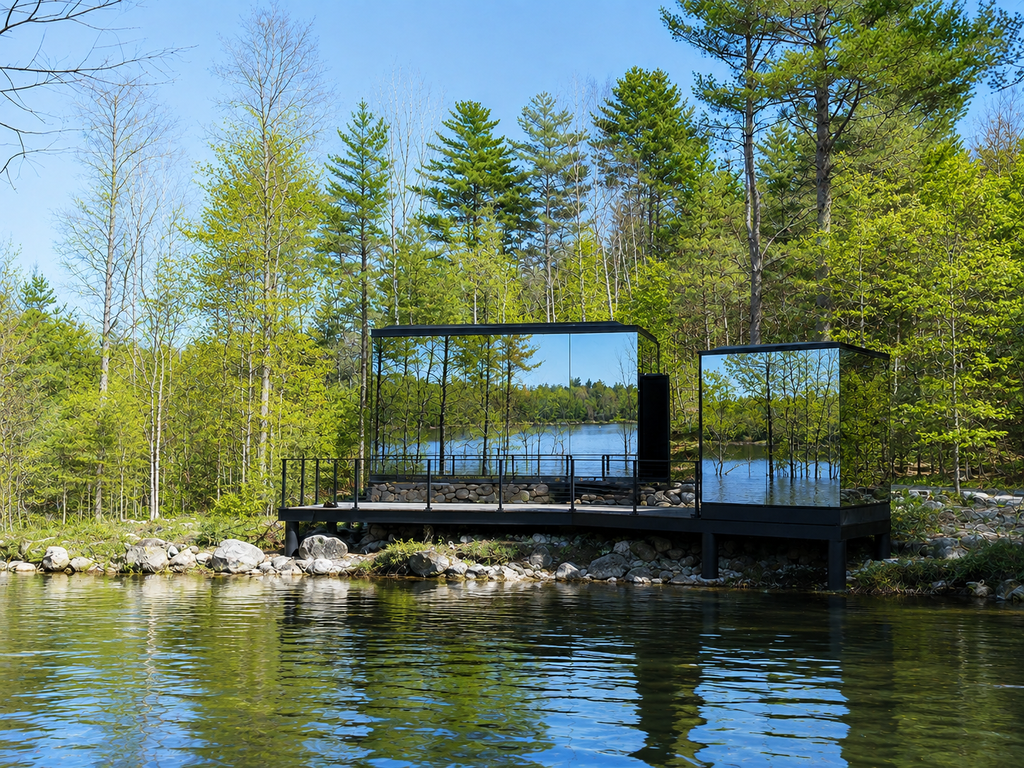
Spring brings fresh greenery, flowers and new life to outdoor hospitality destinations.
Surrounded by trees and natural landscapes, the reflective exterior of a Mirror Cabin helps the building visually blend into its environment while still creating a distinctive architectural experience.
For glamping resorts and nature retreats, spring is an ideal season to promote relaxing weekend stays and outdoor experiences.
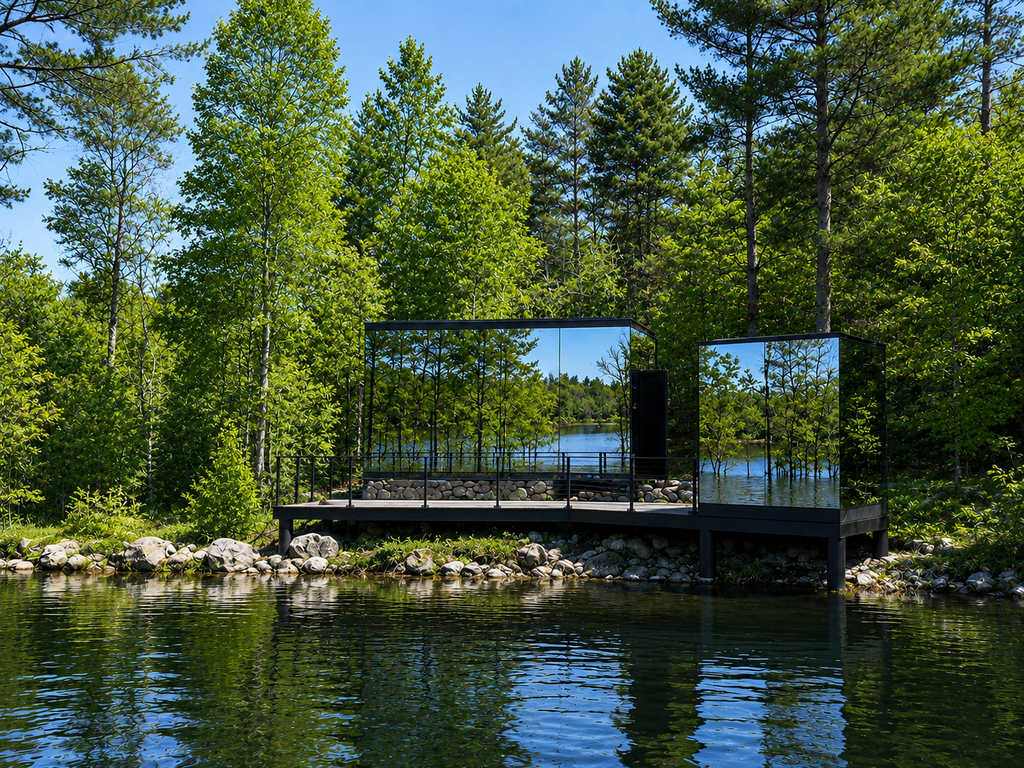
Summer is one of the most important seasons for many campgrounds and glamping resorts.
Placed beside a lake, in a forest or overlooking an open landscape, a Mirror Cabin can turn the surrounding scenery into part of the accommodation experience.
Large glass areas also help connect the interior with the outdoors, giving guests the feeling of staying directly within nature.
For resort operators, a visually distinctive glamping cabin can also become an important marketing asset for booking platforms and social media.
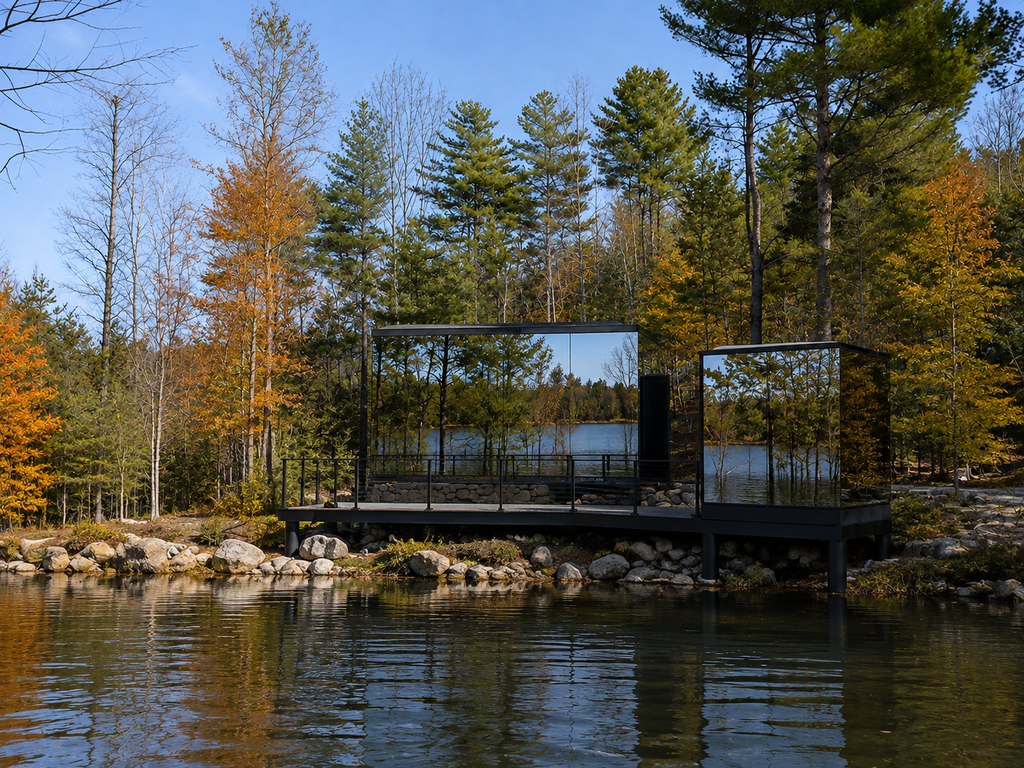
When the landscape changes, the cabin changes with it.
Golden trees and warm autumn colors reflected across the exterior can create a completely different atmosphere from the same cabin used during summer.
This allows hospitality operators to promote the same accommodation with new seasonal photography, packages and experiences throughout the year.
One cabin. Different seasons. Different reasons to visit.
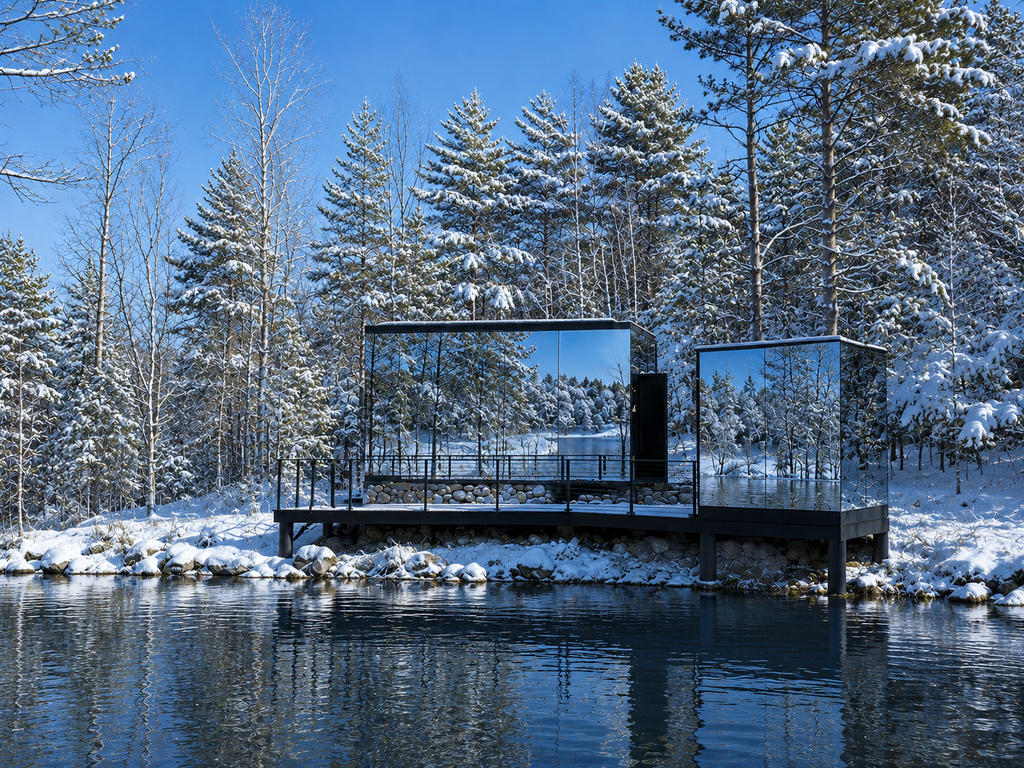
Winter can create one of the most impressive environments for a Mirror Cabin.
Snow-covered forests and mountains reflected across the mirrored exterior create a strong contrast with the warm interior lighting.
For mountain resorts, winter glamping destinations and nature retreats, this combination can help create a premium accommodation experience that guests remember — and want to photograph.
For a hospitality operator, choosing accommodation is not only about adding another room.
The unit also needs to help the property stand out.
A Mirror Cabin can provide:
Instead of building accommodation that looks the same throughout the year, the surrounding landscape becomes part of the design.
PD Modular manufactures Mirror Cabins and modular cabins for glamping resorts, boutique hotels, campgrounds and nature retreats.
Cabin dimensions, interior layouts, finishes, insulation systems, electrical standards and other specifications can be customized according to the project location and requirements.
Whether the project is located beside a lake, in a forest, in the mountains or in a snowy destination, the goal is the same:
Create accommodation that becomes part of the experience — not simply another place to sleep.
Planning a new glamping resort or adding cabins to an existing property?
Contact PD Modular to discuss the cabin configuration, customization and shipping options for your project.
Mirror Cabins can be adapted for different hospitality environments, from small glamping sites to boutique resorts and nature retreats. Depending on the project, the cabin layout, interior finishes, insulation, electrical system and other specifications can be customized.
For operators planning an expansion, modular construction also provides greater flexibility when developing accommodation across different locations. Whether you are planning one showcase unit or multiple cabins for a larger resort, the configuration can be developed around the site, target guests and local requirements.
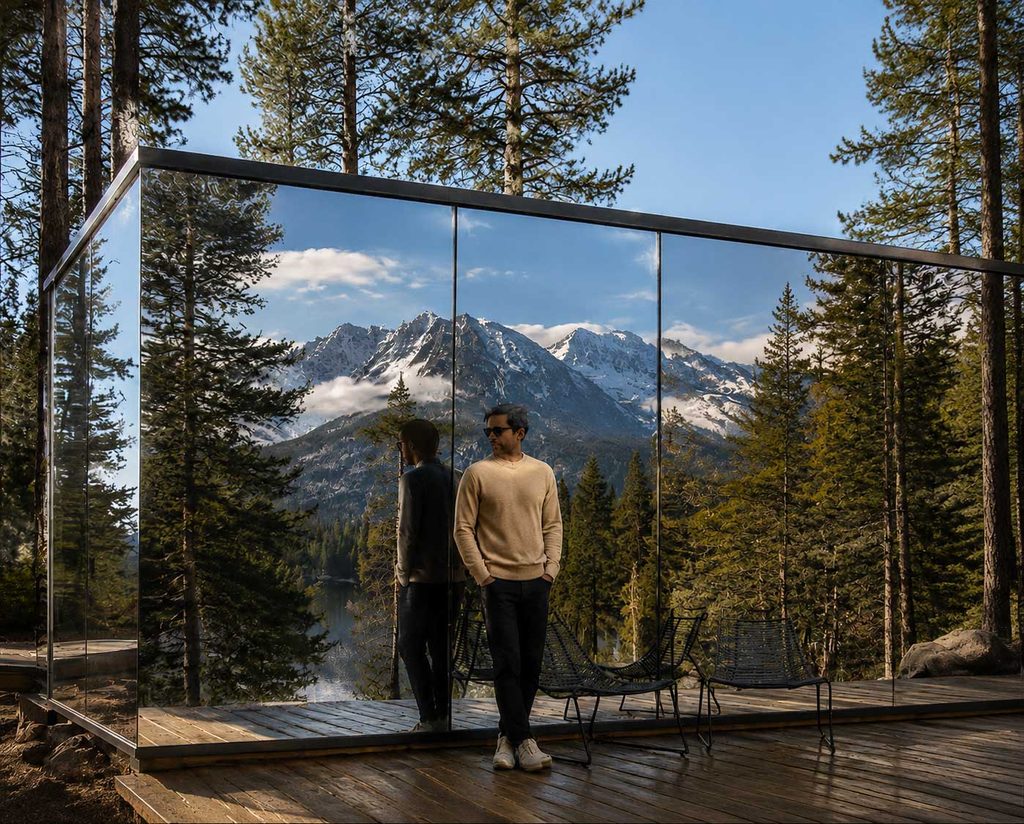
Modular cabin cost is one of the first questions for developers planning a glamping resort, holiday park, boutique hotel, or cabin rental business. Prices can vary significantly depending on size, specifications, interior finishes, glazing, customization, and shipping requirements.
If you are planning a glamping resort, holiday park, boutique hotel, or cabin rental business, one of the first questions is simple:
How much does a modular cabin cost?
The answer depends on the cabin size, structure, interior finish, glass system, bathroom, electrical system, insulation, customization, and shipping method.
For commercial hospitality projects, it is more useful to look at the total project value rather than only the purchase price of the cabin.
A standard modular cabin can vary significantly in price depending on its specification.
Basic units designed for simple accommodation are usually more affordable, while luxury cabins with large glass walls, premium interiors, bathrooms, kitchens, smart systems, and custom exterior finishes cost more.
At PD Modular, we manufacture modular cabins directly in our factory in China and can customize the structure, dimensions, interior layout, insulation, doors, windows, bathroom, kitchen, and exterior finish according to the project.
Several factors determine the final modular cabin cost.
Larger cabins require more steel, insulation, wall panels, flooring, electrical components, and interior materials.
A basic accommodation cabin costs less than a fully finished hotel-style unit.
Options can include:
Large panoramic windows, Low-E glass, laminated glass, double glazing, triple glazing, and mirror glass can significantly change the price.
For resorts and scenic destinations, however, better glazing can also increase the visual value of the accommodation.
The insulation system should be selected according to the project location.
Cabins for cold European or North American climates may require stronger thermal performance than cabins used in warmer regions.
Commercial projects often require different layouts, exterior finishes, branding, terraces, doors, windows, or interior configurations.
Working directly with a manufacturer makes these modifications easier to manage.
Purchase price is only one part of the decision.
Traditional construction normally requires significant on-site work, including materials, contractors, equipment, and longer construction schedules.
Modular cabins can complete much of the manufacturing work inside the factory before delivery.
This can help resort developers reduce on-site construction work and shorten the time between investment and opening.
For hospitality operators, speed can be particularly important.
A faster installation means accommodation units can potentially begin generating revenue sooner.
Modular cabins are therefore increasingly considered for:
One advantage of modular accommodation is scalability.
A developer can begin with several cabins, evaluate occupancy and guest demand, and add more units later.
This can be particularly useful for landowners and smaller resort operators who do not want to develop the entire property at once.
PD Modular is a modular building manufacturer in China.
We provide customized modular accommodation solutions for hospitality and tourism projects, including modular cabins, mirror cabins, container accommodation, and other prefabricated structures.
Our team can support projects from cabin configuration and customization through production and international shipping.
If you are evaluating modular cabins for a resort, hotel, campground, or short-term rental project, send us your:
Project location + required quantity + preferred cabin size + intended use.
We can recommend a suitable configuration and prepare a factory quotation for your project.
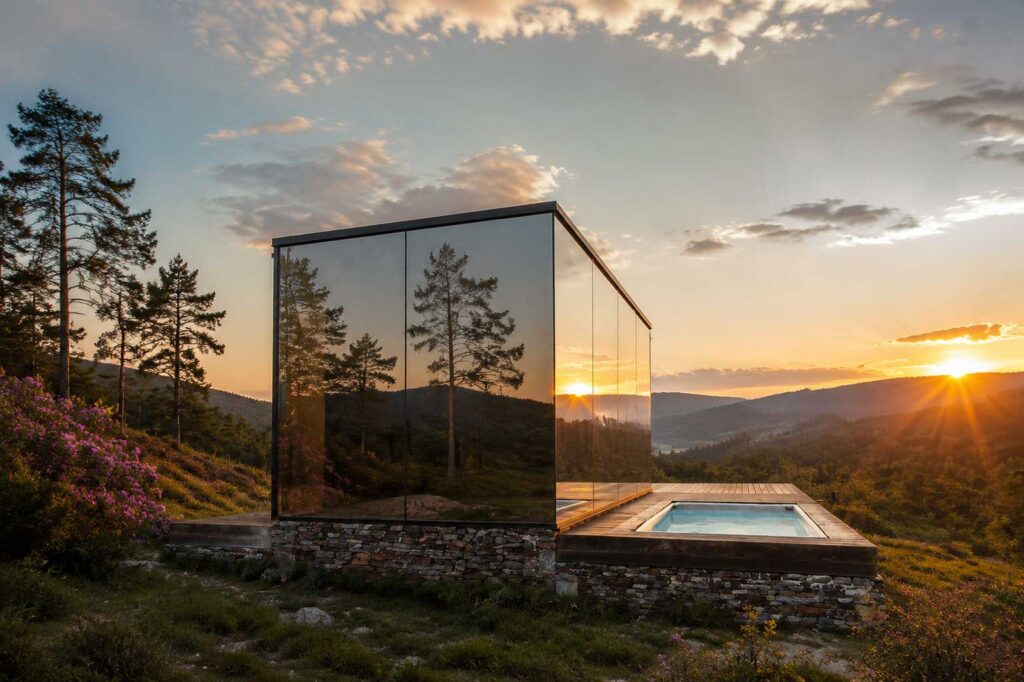
A modular cabin is becoming an increasingly popular accommodation solution for resorts, hotels, glamping sites, holiday parks, and tourism developments around the world.
Compared with traditional on-site construction, modular cabins are manufactured in a controlled factory environment and delivered to the project site for installation. This approach can significantly reduce construction time, simplify project management, and provide greater control over quality and cost.
For hospitality developers, the real advantage is flexibility. A project can begin with a small number of cabins and expand as occupancy and market demand increase.
A modular cabin is a prefabricated building manufactured primarily in a factory before being transported to its final destination.
Depending on the design and transportation requirements, modular cabins can be delivered as complete units or as modular components for final assembly on site.
Modern modular cabins can include:
This makes modular cabins suitable for both simple accommodation projects and premium hospitality developments.
Hotels and resorts traditionally require considerable construction time, local labor, and on-site coordination.
A modular cabin resort uses a different approach.
Much of the construction work takes place inside the factory while site preparation can proceed separately. Once the foundations and utilities are ready, completed cabins can be transported to the destination and installed.
For developers, this can provide several advantages.
Traditional construction can take many months or even years.
Factory production allows multiple modular cabins to be manufactured simultaneously, helping developers shorten the period between project planning and opening.
For hospitality businesses, opening earlier can also mean generating accommodation revenue sooner.
Construction costs can become difficult to control when projects depend heavily on local labor and extended on-site construction.
Factory manufacturing allows materials, labor, specifications, and production processes to be planned before production begins.
This can make the overall building cost more predictable.
A modular cabin manufacturer can standardize major production processes, including:
For projects requiring multiple accommodation units, consistent manufacturing becomes especially important.
One of the biggest advantages of modular hospitality development is scalability.
A resort may begin with 10 cabins and later expand to 20, 30, or more units as demand grows.
Instead of constructing the entire resort at once, developers can expand the accommodation capacity in phases.
The growth of experiential tourism has created demand for accommodation that offers more than simply a place to sleep.
Guests increasingly look for privacy, natural surroundings, distinctive architecture, and memorable experiences.
This is why modular cabins for glamping resorts have become particularly attractive.
Different cabin designs can be used to create different accommodation experiences within the same destination.
Examples include:
For resort developers, architecture itself can become part of the attraction.
One increasingly popular category is the mirror cabin.
Mirror cabins use reflective exterior surfaces to visually integrate the building with its surroundings. Forests, mountains, lakes, and other landscapes are reflected across the building exterior.
This creates a distinctive architectural experience while maintaining a comfortable interior accommodation space.
Mirror cabins are particularly suitable for:
For hospitality projects, distinctive accommodation can also provide an additional marketing advantage because visually recognizable buildings are more likely to be photographed and shared by guests.
Professional modular cabin manufacturers can adapt cabins according to the requirements of each project.
Customization may include:
Cabins can be designed for couples, families, hotel suites, or larger accommodation units.
Possible exterior materials include metal panels, timber finishes, glass curtain walls, mirror glass, and composite materials.
Developers can customize:
Insulation systems can be selected according to the destination climate.
Cabins intended for cold regions require different insulation specifications from cabins installed in tropical or desert environments.
Large panoramic glazing can help connect the interior accommodation space with the surrounding landscape.
Depending on the project requirements, cabins can incorporate HVAC, ventilation, plumbing, electrical systems, smart controls, and other equipment.
The right construction method depends on the project.
Traditional construction remains suitable for many large permanent buildings. However, modular cabins can offer important advantages for accommodation developments requiring multiple independent units.
| Factor | Modular Cabin | Traditional Construction |
|---|---|---|
| Production | Factory manufacturing | Mainly on-site |
| Construction speed | Faster | Usually longer |
| Quality control | Factory controlled | Depends heavily on site conditions |
| Expansion | Easy to add units | More complex |
| Site disruption | Lower | Higher |
| Design customization | High | High |
| Transportation required | Yes | Usually no |
For remote tourism destinations, reducing on-site construction can be particularly valuable.
The cost of a modular cabin depends on several factors:
Therefore, comparing modular cabins only by price per square meter can be misleading.
A basic cabin and a fully equipped luxury resort cabin may have completely different specifications even when their dimensions are similar.
For commercial projects, developers should request a detailed specification together with the quotation.
Selecting the right modular cabin manufacturer is important, particularly for international hospitality projects.
Before placing an order, developers should evaluate several areas.
The supplier should be able to demonstrate actual production capability rather than simply providing architectural renderings.
Previous projects help buyers understand the manufacturer’s production quality and experience.
Hospitality projects often require modifications based on climate, site conditions, branding, and guest experience.
The manufacturer should therefore be capable of adapting existing products or developing customized solutions.
Structural fabrication, waterproofing, insulation, electrical systems, plumbing, doors, windows, and interior finishes should all be inspected during production.
Export projects involve more than manufacturing.
Packing, container loading, transportation dimensions, documentation, destination requirements, and installation methods should be considered during the design stage.
Modular cabins can be transported in different ways depending on their dimensions and design.
Some cabins can be shipped as complete units. Once they arrive at the project site, they are positioned on prepared foundations and connected to utilities.
Larger buildings may use a modular or disassembled transportation system to improve shipping efficiency.
For international projects, transportation should therefore be considered from the beginning of the design process rather than after production is completed.
A modular resort does not need to consist only of guest rooms.
The same modular construction system can be used for other facilities, including:
This allows developers to create a more complete hospitality destination using a coordinated modular building system.
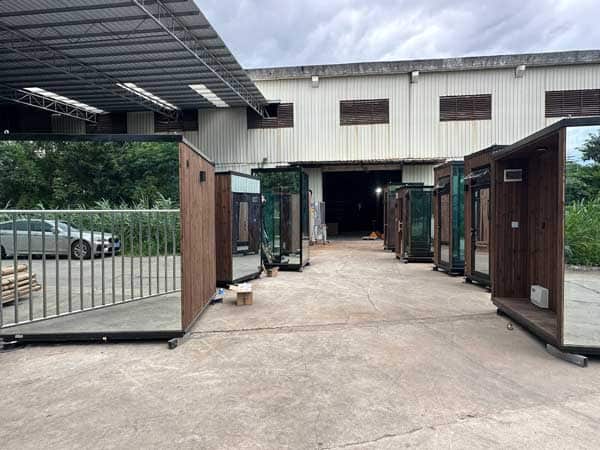
PD Modular is a modular building manufacturer providing factory-direct modular cabins and customized building solutions for hospitality and tourism projects.
Our solutions include modular cabins, mirror cabins, glamping accommodation, resort buildings, and supporting facilities.
We work with project developers, resorts, hotels, glamping operators, distributors, and other international partners.
Our manufacturing approach combines standardized factory production with project-specific customization, allowing clients to select building sizes, layouts, materials, interior finishes, and technical configurations according to their requirements.
Whether you are developing a glamping resort, boutique hotel, holiday park, Airbnb project, or other tourism destination, the right modular cabin solution should balance design, manufacturing cost, transportation efficiency, installation, and long-term operation.
PD Modular can provide factory-direct pricing, customized designs, technical specifications, and completed project references for your evaluation.
Contact PD Modular to discuss your modular cabin project and request a factory quotation.
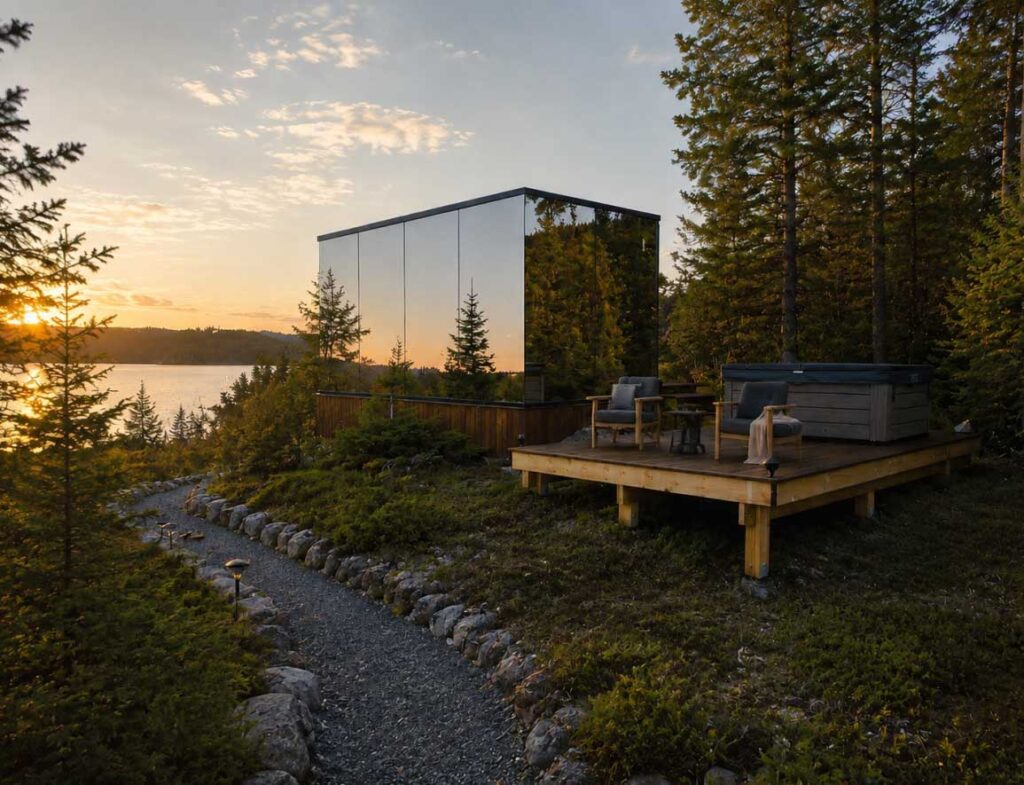
The hospitality industry is changing rapidly. More travelers are looking for unique outdoor experiences that combine nature, comfort, and design.
Glamping resorts have become a popular investment opportunity because they offer guests a memorable experience while allowing developers to create flexible accommodation projects in different environments.
Unlike traditional hotels, glamping projects can be developed with modular cabins, reducing construction time and providing more design flexibility.
In this guide, we will explore the key steps to starting a successful glamping resort.
Location is one of the most important factors in a tourism project.
Successful glamping destinations are often built in areas with attractive natural features, such as:
A good location should not only provide beautiful views but also offer convenient access, basic infrastructure, and potential tourism demand.
Modern travelers are not only looking for a place to sleep. They want memorable experiences.
Different accommodation concepts can help a resort stand out:
Unique designs can become attractions themselves and encourage visitors to share their experiences through social media.
A successful glamping resort is not only about rooms.
Investors should consider the complete guest journey, including:
These additional facilities can increase guest satisfaction and create more revenue opportunities.
Traditional construction methods often require long preparation times and complicated processes.
Modular buildings provide several advantages:
Most manufacturing work can be completed in a controlled factory environment, reducing onsite construction time.
Modular cabins can be customized according to:
A modular approach allows investors to develop projects in phases, starting with several units and expanding according to market performance.
A successful hospitality project needs both attractive design and business planning.
Investors should consider:
Creating a unique destination can help a project achieve higher pricing compared with standard accommodation.
Building a glamping resort requires cooperation between designers, manufacturers, and project partners.
A complete solution usually includes:
With the right planning, modular hospitality projects can transform unique locations into profitable destinations.
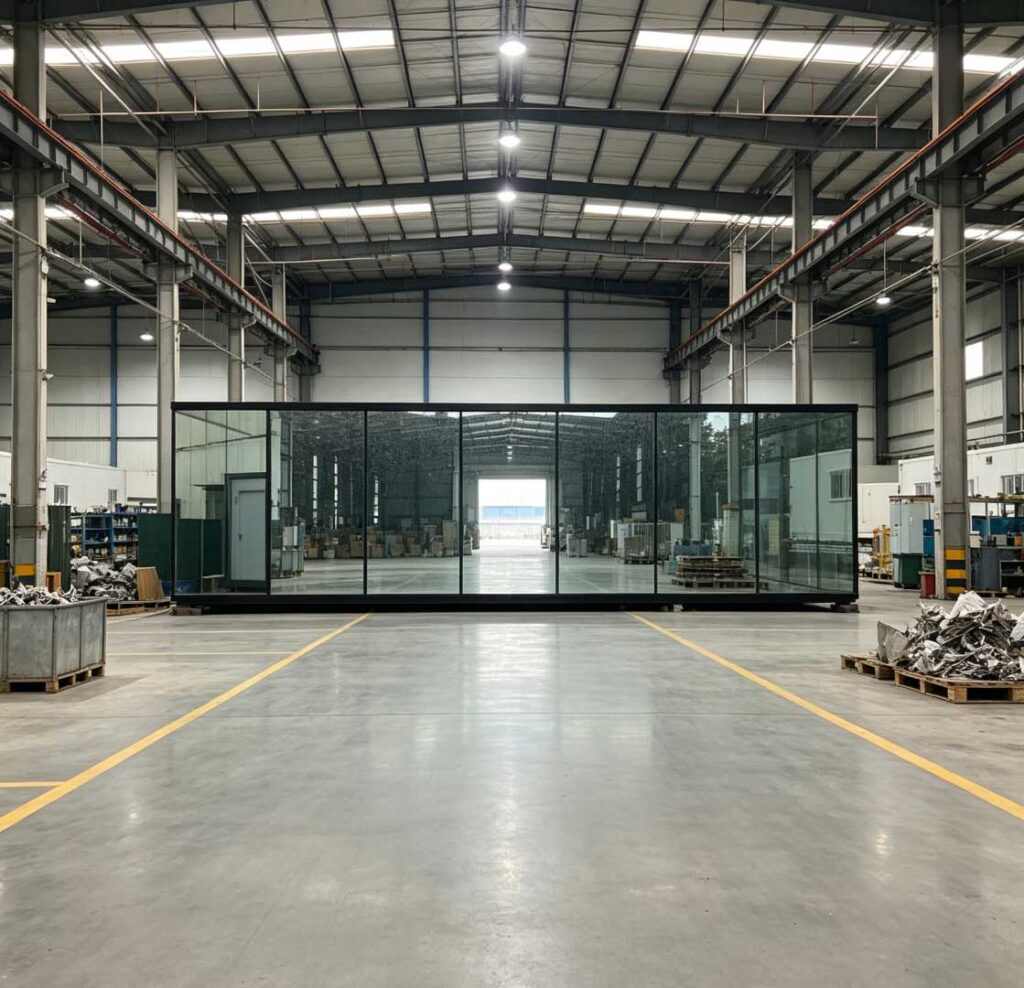
Glamping resorts represent a growing opportunity in the tourism market. By combining attractive locations, unique accommodation designs, and efficient construction methods, investors can create destinations that attract modern travelers.
PD Modular provides modular building solutions for hospitality, tourism, and commercial projects, helping partners develop unique accommodation concepts from design to manufacturing.
Many investors focus only on accommodation units when planning a glamping resort. However, a successful destination requires more than beautiful cabins.
The guest experience depends on several factors, including site accessibility, landscape design, public facilities, operational planning, and marketing strategy.
Choosing the right modular accommodation partner can help reduce construction time and improve project flexibility. Investors can start with a small number of units and expand according to market performance.
A well-planned glamping project combines unique design, efficient construction, and a clear business model to create long-term value.